Phoenix, AZ · Updated
Inground pool installation costs in Phoenix, AZ
Inground pool installation in Phoenix ranges from $34,300 to $70,450, with a typical job costing around $49,100 and including excavation, construction, and equipment. A permit is required for building a residential pool in Phoenix, and the application must include the contractor's Arizona ROC license class and number, along with the pool, spa, and total square footage (Pool and Spa Residential Permit Application (City of Phoenix PDD, TRT/DOC/00916)). The minimum permit fee is $234, plus a $30 aquatics program surcharge, and applications can be submitted entirely by email to plotplan.submittals@phoenix.gov (City of Phoenix Planning & Development Department Fee Schedule (Appendix A.2, effective 1/20/2026)) (Residential Pool/Spa Permits | City of Phoenix). Permits must be applied for through Phoenix’s building department, which requires details like the contractor's ROC license and pool square footage (Pool and Spa Residential Permit Application (City of Phoenix PDD, TRT/DOC/00916)).
Free to use in Phoenix. One matched pro, named up front.
Phoenix pool quotes, explained — then one builder matched to your budget.
- Pro's name before contactYou hear the pro's name from us before they call. Ask them for their license number and check it yourself. Check a license at azroc.my.site.com
- One pro, not a listWe tell you who before they call.
- Free for you — pros pay usNo job payment passes through us. You contract with and pay the independent pro directly. We never bid on or do the work.
- Updated October 2026Every price on this site shows its source and date.
Price check
The going rate for inground pool installation in Phoenix
Phoenix pool build price bands
| Job | Low | Typical | High | Source |
|---|---|---|---|---|
| Inground pool installation | $34,300 | $49,100 | $70,450 | angi.com, nerdwallet.com, 2026-09 |
| Pool deck | $10/sq ft | $11/sq ft | $13/sq ft | homewyse.com, 2026-09 |
| Pool resurfacing | $5,900 | $9,350 | $14,800 | angi.com, 2026-09 |
Typical ranges from public data (angi.com, nerdwallet.com, homewyse.com; September 2026), not a quote — your contractor's written contract sets the price.
All Phoenix inground pool installation prices
estimated band, not a quote. Prices as of Sep 2026.
Before you ask
Is this free?
Yes. Matching is free for homeowners. The pro pays us a fee for the introduction. You never pay us, and no job payment passes through us.
What if you can't find a pro?
We email you within 1 business day, and we delete your request from our matching queue.
Will lots of companies call me?
No. We match each request with one pro, and we tell you who before they contact you.
Choose a service
Inground Pool Installation services in Phoenix
Start from the job you have in mind; each Phoenix page carries its own sources.
- Fiberglass Pool Installation$25.1k–$49k
- Pebble Tec$4k–$15.8k
- Pool Deck
- Pool Remodel$5.5k–$15.6k
- Pool Resurfacing$5.9k–$14.8k
Costs · FAQ · Get matched
How it works
How matching works
From your request to a Phoenix quote in three plain steps, free for you.
- Tell us the job. Use the 2-minute form.
- We find one matched Phoenix pro. We tell you who before your number goes to them, or tell you if we can't match you.
- You decide. The pro quotes. If you go ahead, you contract with and pay the pro directly. We don't perform or bid on the work. Matching is free; the pro pays us, not you.
How soon?
How soon do you need it?
Whether it is today or next year in Phoenix, here is the sensible first step.
Right now
Fence or gate around a Phoenix pool not latching — keep children away and tell us the job.
Start the matchNext few weeks
Want to swim next summer in Phoenix — book a design visit now; permits take weeks.
Start the formNext season
Saving for a pool and patio in Phoenix — note the range now; each price shows its date.
Run the numbers
Before you book
When a pro may not be needed
A homeowner in Phoenix may avoid hiring a pro for minor repairs like fixing a leak or replacing a filter. For major projects like building a new inground pool, hiring a licensed contractor is required. Repair-only quotes are the cautious route.
Read the rest
One matched pro, not a list
We're lining up one Phoenix pool build pro. We'll email you the name of the Phoenix pro we match you with within 1 business day. If we can't match you with a Phoenix pro, we'll email you that too. Your number goes to that pro only after you've heard their name from us.
Before your number goes to anyone, we tell you the pro's name, so you can ask for their license number and check it yourself. How matching works.
Local data
The local picture in Phoenix
The Phoenix figures behind the ranges above, each with its source.
- 1985 median year homes were built ACS 5-year 2020-2024, B25035 Median Year Structure Built
- 42% of homes built before 1980 ACS 5-year 2020-2024, B25034 Year Structure Built
- $234 a sourced city permit fee line (full list in the permit table) City of Phoenix Planning & Development Department Fee Schedule (Appendix A.2, effective 1/20/2026)
Home age chart for Phoenix
Common questions
Questions Phoenix homeowners ask
Frequently Asked Questions About Inground Pool Installation in Phoenix
What is the average cost of having an inground pool installed in Phoenix?
The typical cost for an inground pool installation in Phoenix is around $49,100, with prices ranging from $34,300 to $70,450 depending on size, materials, and features. This includes excavation, construction, and equipment.
Does pool build need a city permit in Phoenix during February's wettest month?
Yes: On Phoenix pool permits, a pool electrical sub-panel over 60 amps requires electrical plans, and standard-plan pools need a separate permit for a gas line to a heater (Pool and Spa Residential Permit Application (City of Phoenix PDD, TRT/DOC/00916)).
What is a gunite pool in Phoenix?
A gunite pool is constructed by spraying a concrete mixture onto a steel framework, forming the shell of the pool. This method allows for custom shapes and is commonly used in Phoenix for its durability and flexibility.
What license should a pool builder in Phoenix hold in February, the wettest month?
Phoenix's residential pool permit application asks for the contractor's Arizona ROC license class and number and the pool, spa and total square footage (Pool and Spa Residential Permit Application (City of Phoenix PDD, TRT/DOC/00916)).
Service area
Service area
Phoenix Inground Pool Guide takes requests from homeowners anywhere in Phoenix and matches each one with an independent local pro by ZIP code. Phoenix Inground Pool Guide has no office or crew in Phoenix; the pro you are matched with quotes and does the work.
Where you can send a request
Long read
Inground Pool Installation in Phoenix: the guide
The long version for Phoenix: prices, permits and steps, with every source cited.
On this page · 19 sections
Why Phoenix Inground Pool Guide
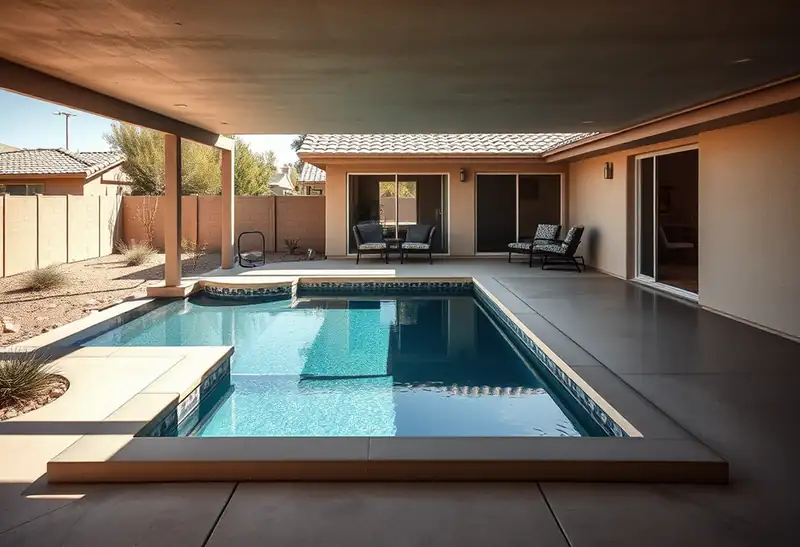
Local data notes for Phoenix
- 111 days Phoenix Sky Harbor averages about 111 days a year at or… ( NOAA NCEI U.S. Climate Normals 1991-2020, Phoenix Sky Harbor Airport (USW00023183) )
What's the Cost for Installing an Inground Pool in Phoenix?
The cost of a concrete inground pool in Phoenix depends on materials and finishes chosen. A gunite or shotcrete shell is durable, with a service life of 25+ years (NAHB/Bank of America Home Equity, Study of Life Expectancy of Home Components (Feb 2007), Table 1).
The plaster interior finish may need resurfacing every 10-15 years due to wear from water chemistry and regional conditions (NAHB/Bank of America Home Equity, Study of Life Expectancy of Home Components (Feb 2007), Table 1). These factors influence long-term maintenance costs, which should be considered alongside initial installation expenses.
Pebble Tec or similar pebble aggregate finishes can extend interior longevity up to 25-35 years (NAHB/Bank of America Home Equity, Study of Life Expectancy of Home Components (Feb 2007), Table 1) Vinyl liner pools are less expensive initially, but liners usually need replacement every 5-9 years (This Old House, "What to Know About Pool Resurfacing" (C. Bickford, updated 2026-06-06)). Fiberglass pools have a gelcoat surface that resists some wear but can degrade from UV and chemical exposure over time (This Old House, "What to Know About Pool Resurfacing" (C. Bickford, updated 2026-06-06)).
Pool decking typically lasts around 15 years, so it’s important to factor in future replacement costs when budgeting (NAHB/Bank of America Home Equity, Study of Life Expectancy of Home Components (Feb 2007), Table 1). This helps align your choices with both initial and long-term financial planning for your backyard oasis.
How much do pool companies charge in Phoenix for older homes?
Older homes may incur higher costs due to structural adjustments or outdated plumbing. However, concrete pools are a popular choice as they can last 25+ years (NAHB/Bank of America Home Equity, Study of Life Expectancy of Home Components (Feb 2007), Table 1).
What changes the price in Phoenix
Each local rule or condition below changes what to do, choose or pay for this job; sources included.
| Local rule or condition | What it changes | Source |
|---|---|---|
| Phoenix's development fee schedule (effective Jan. 20, 2026) sets a $234 minimum permit fee for swimming pools, plus a $30 aquatics program surcharge on every pool permit | A minimum permit fee of $234 plus a $30 aquatics program surcharge applies to every pool permit in Phoenix (source). | City of Phoenix Planning & Development Department Fee Schedule (Appendix A.2, effective 1/20/2026) |
| Phoenix's valuation-based building permit fee is $303 for the first $10,000 plus $10 per additional $1,000 up to $50,000, and $703 for the first $50,000 plus $9 per $1,000 to $200,000 | The building permit fee depends on the pool's value, starting at $303 for the first $10,000 and increasing with higher values (source). | City of Phoenix Planning & Development Department Fee Schedule (Appendix A.2, effective 1/20/2026) |
| Phoenix charges a $390 hillside review fee for swimming pools, and hillside pool lots need that approval before construction plans are submitted | A $390 hillside review fee is required for swimming pools on hillside lots before submitting construction plans (source). | City of Phoenix Planning & Development Department Fee Schedule (Appendix A.2, effective 1/20/2026) |
| Phoenix's residential pool permit application asks for the contractor's Arizona ROC license class and number and the pool, spa and total square footage | The permit application requires the contractor's Arizona ROC license and details about the pool and spa square footage (source). | Pool and Spa Residential Permit Application (City of Phoenix PDD, TRT/DOC/00916) |
| Once a Phoenix pool barrier is approved it must stay for the life of the pool, and a new permit is needed to enlarge, alter, repair, remove or replace it | Once a Phoenix pool barrier is approved, it must remain unchanged for the life of the pool (source). | Pool Barriers - Requirements (City of Phoenix PDD, TRT/DOC/00144, rev. 01/26) |
| Phoenix requires a pool barrier fence at least 5 feet high measured from the outside, with no opening a 4-inch ball can pass through | The pool barrier fence must be at least 5 feet high with no opening large enough for a 4-inch ball to pass through (source). | Pool Barriers - Requirements (City of Phoenix PDD, TRT/DOC/00144, rev. 01/26) |
Illustrative example based on the public data cited on this page (October 2026), not a quote — your contractor's written contract sets the price.
Inground vs Above Ground Pools
Choosing between inground and above-ground pools in Phoenix depends on your budget, space, and long-term plans for use and maintenance. Inground pools offer more durability and visual appeal but require greater upfront investment and compliance with local safety rules.
In Phoenix, inground pools are a popular choice due to the city’s warm climate, which allows year-round use. However, they come with higher costs and stricter requirements for safety barriers, such as self-closing gates that must swing outward and be at least 54 inches above ground (Pool Barriers - Requirements (City of Phoenix PDD, TRT/DOC/00144, rev. 01/26)). Above-ground pools are more affordable but may not last as long in Phoenix’s intense sun exposure, which can degrade materials like gelcoat on fiberglass pools (www.thisoldhouse.com). Both options must meet the city’s 5-foot-high fence requirement with no openings larger than a 4-inch ball can pass through (Pool Barriers - Requirements (City of Phoenix PDD, TRT/DOC/00144, rev. 01/26)).
When considering inground vinyl pool construction in Phoenix, the durability of materials is crucial. Vinyl pools are less expensive than concrete or fiberglass but may require more frequent maintenance to prevent issues like rough or cracked surfaces caused by water chemistry and UV exposure over time. Additionally, if your home is within five feet of the pool’s edge, windows below 60 inches from the deck must be tempered glass for safety (Pool Barriers - Requirements (City of Phoenix PDD, TRT/DOC/00144, rev. 01/26)). These details influence both cost and long-term care, so understanding local codes is essential before beginning any project.
Phoenix requires an inner barrier between the house and pool for all new installations permitted after May 4, 1990. Options include a fence, using the house wall with compliant doors and windows, or a motorized safety cover (Pool Barriers - Requirements (City of Phoenix PDD, TRT/DOC/00144, rev. 01/26)). For above-ground pools, these rules still apply, but they may be easier to meet due to simpler construction methods. However, for inground models, especially vinyl or concrete, compliance with horizontal rail spacing and fence openings is mandatory to ensure child safety (Pool Barriers - Requirements (City of Phoenix PDD, TRT/DOC/00144, rev. 01/26)). These factors directly affect both the design and cost of your pool project.
What are the differences between steel wall and vinyl inground pools in Phoenix?
Steel wall inground pools are typically more rigid and durable but may be more expensive. Vinyl pools offer a lower upfront cost and can be easier to repair, though they may degrade faster with sun exposure and water chemistry over time. Both must meet Phoenix’s safety barrier requirements, including self-closing gates and rail spacing (ISPSC local amendment).
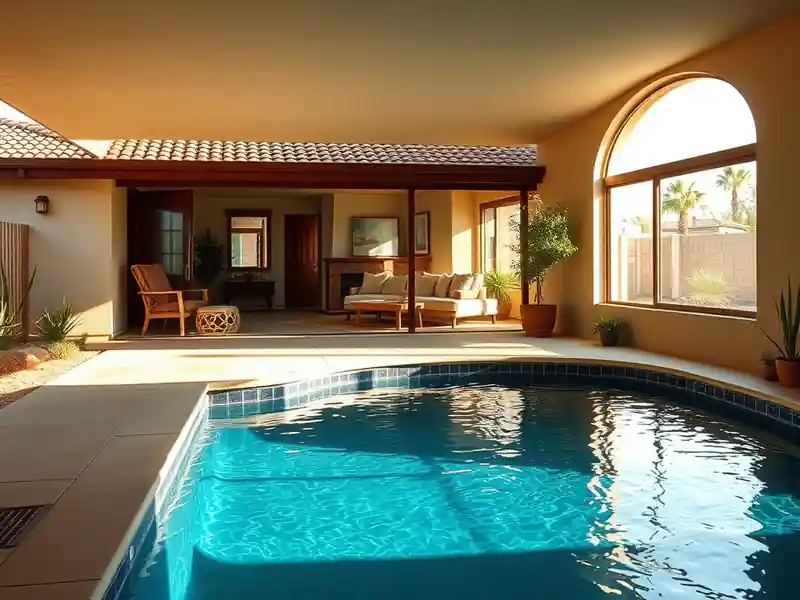
Phoenix inground vinyl pool construction
In Phoenix, constructing an inground vinyl pool involves ensuring the structure meets local safety codes. Vinyl pools are popular for their affordability but require careful maintenance to prevent surface degradation from UV exposure and chemical use. Compliance with barrier rules, including fence height and rail spacing, is essential for any new installation.
A worked budget
A typical budget includes an inground pool costing approximately $49,100.
| Line | Amount |
|---|---|
| Local band typical | $49,100 |
| City permit fee at that valuation | $703 |
| Illustrative total | $49,800 |
Illustrative example based on the public data cited on this page (October 2026), not a quote — your contractor's written contract sets the price.
Permits in Phoenix
| Item | Fee | Source |
|---|---|---|
| Once a Phoenix pool barrier is approved it must stay for the life of the pool, and a new permit is needed to enlarge, alter, repair, remove or replace it. (Pool Barriers - Requirements (City of Phoenix PDD, TRT/DOC/00144, rev. 01/26)) | — | Pool Barriers - Requirements (City of Phoenix PDD, TRT/DOC/00144, rev. 01/26), 2026-01 |
| Phoenix inspects new pools twice for code life-safety items, at pre-gunite and pre-plaster, with the barrier fence checked at pre-plaster. (Pool Barriers - Requirements (City of Phoenix PDD, TRT/DOC/00144, rev. 01/26)) | — | Pool Barriers - Requirements (City of Phoenix PDD, TRT/DOC/00144, rev. 01/26), 2026-01 |
Permit rules from Pool Barriers - Requirements (City of Phoenix PDD, TRT/DOC/00144, rev. 01/26). Rules change — confirm with the Phoenix building/permit office before you start.
Finding Pool Contractors in Phoenix, AZ
Finding licensed pool contractors in Phoenix involves checking Arizona's ROC database and confirming their license class matches your project type, such as inground pools or solar integration.
The cost of a pool build in Phoenix ranges from $34,300 to $70,450 per job, depending on materials and design. Choosing the right contractor is crucial because Arizona requires any contract over $1,000 to include written details like the license number, price, payment schedule, and completion date (A.R.S. 32-1158 - Arizona Legislature).
For example, if you are installing an inground pool with solar, the contractor must hold a B-6 classification (Arizona Contractor License Information - National Contractor License Agency). This step prevents costly delays and misunderstandings later in the process. These details influence long-term maintenance costs.
For inground pools specifically, choosing a contractor with experience in both design and installation can streamline the process and reduce the risk of delays or rework. This highlights the importance of confirming a contractor’s credentials before starting work.
How can I find licensed pool companies near me in Phoenix?
Verify the contractor's details, including their license number and written contract terms, to ensure they are qualified for your specific work (A.R.S. 32-1158 - Arizona Legislature).
Inground pools in Phoenix
For inground pools, choose a contractor with a B-5 or B-6 classification. Confirm their experience with materials like Pebble Tec and ensure they provide written contracts with full project details. This helps avoid delays and ensures the work meets local standards.
DIY Approaches for Pool Repair in Phoenix
Replacing a skimmer on your own inground pool in Phoenix can save costs, but it depends on your skill level and understanding of local regulations and safety standards. Consider the complexity involved and whether you have the right tools and knowledge.
If you're thinking about replacing a skimmer yourself, start by checking Phoenix's requirements for pool barriers and permits. Once approved, any barrier must remain for the life of the pool, and modifications like skimmer replacement may need new permits (Pool Barriers - Requirements (City of Phoenix PDD, TRT/DOC/00144, rev. 01/26)). This means even minor repairs could involve paperwork and inspections to ensure safety and compliance with local codes. Before beginning, understand that Phoenix inspects pools twice during construction—once before gunite and again before plaster—with the barrier fence checked at pre-plaster (Pool Barriers - Requirements (City of Phoenix PDD, TRT/DOC/00144, rev. 01/26)). These steps are designed to maintain safety standards, so you must be prepared for inspections if you proceed independently.
When tackling a skimmer replacement on your own, consider the electrical components involved. Phoenix requires electrical plans for sub-panels over 60 amps, and gas lines for heaters also need separate permits (Pool and Spa Residential Permit Application (City of Phoenix PDD, TRT/DOC/00916)). This means even simple repairs could require professional help or additional permits if they involve electrical or gas systems. If you're not confident in handling these aspects, it might be better to consult a licensed contractor rather than trying to manage everything on your own.
Before starting any DIY work, review Phoenix’s permit fee schedule for swimming pools. There is a minimum $234 permit fee plus a $30 aquatics program surcharge (City of Phoenix Planning & Development Department Fee Schedule (Appendix A.2, effective 1/20/2026)). Additionally, hillside lots require a $390 hillside review fee before construction plans are submitted (City of Phoenix Planning & Development Department Fee Schedule (Appendix A.2, effective 1/20/2026)). These costs may add up quickly if you need permits for even minor repairs. Weigh the time and money required for permits against the potential savings of doing it yourself.
Can I replace a skimmer on my own inground pool in Phoenix?
Replacing a skimmer yourself is possible if you understand local permit requirements and safety regulations. Ensure you check for any needed permits, as modifications to your pool might require inspections or new approvals (Pool Barriers - Requirements (City of Phoenix PDD, TRT/DOC/00144, rev. 01/26)).
Phoenix replace skimmer inground pool
Replacing a skimmer in Phoenix may involve permit requirements and inspections.
Building an Inground Pool
Building an inground pool in Phoenix costs between $34,300 and $70,450, with timelines influenced by permit processes and material choices like fiberglass or gunite. Local codes and inspections also affect the schedule.
Starting a fiberglass inground pool project in Phoenix involves applying for permits through email to plotplan.submittals@phoenix.gov, which can delay the process if not done early (Residential Pool/Spa Permits | City of Phoenix). Standard-plan pools need a separate permit for a gas line to a heater (Pool and Spa Residential Permit Application (City of Phoenix PDD, TRT/DOC/00916))
Phoenix’s hillside review fee of $390 adds to the cost and must be approved before submitting construction plans (City of Phoenix Planning & Development Department Fee Schedule (Appendix A.2, effective 1/20/2026)). This step ensures compliance with city amendments to the International Swimming Pool and Spa Code, which may impact how the pool is built and where it can be placed (Pool Barriers - Requirements (City of Phoenix PDD, TRT/DOC/00144, rev. 01/26)). Permits also require details like the contractor’s Arizona ROC license number and total pool square footage, ensuring that only qualified professionals proceed (Pool and Spa Residential Permit Application (City of Phoenix PDD, TRT/DOC/00916)).
Draining or backwashing a pool into the street is prohibited in Phoenix; water must be discharged via the sanitary sewer or used on salt-tolerant plants, which can influence how maintenance systems are designed and installed (Properly Drain and Backwash Your Pool (City of Phoenix Water Services flyer)). The city’s permit process also includes separate approvals for gas lines to heaters and electrical sub-panels over 60 amps, adding complexity and time to the timeline (Pool and Spa Residential Permit Application (City of Phoenix PDD, TRT/DOC/00916)). These requirements ensure safety but can extend the construction period by a few weeks if not planned for in advance.
Phoenix inground pool construction process
The process starts with submitting a permit application by email, including the contractor’s license and pool details. After approval, construction proceeds, but additional reviews for gas lines, electrical systems, and hillside compliance can add time to the project.
How long common pool build options last and what to know (general industry sources, not local rules).
| Option | Typical service life | What to know | Source |
|---|---|---|---|
| Concrete pool shell | 25+ years | NAHB lists the concrete pool shell at 25+ years and 'swimming pool, general' as lifetime (source) | NAHB/Bank of America Home Equity, Study of Life Expectancy of Home Components (Feb 2007), Table 1 |
| Plaster interior finish | 10-15 years | NAHB lists pool plaster at 10-15 years (source) | NAHB/Bank of America Home Equity, Study of Life Expectancy of Home Components (Feb 2007), Table 1 |
| Pebble aggregate finish (e.g., Pebble Tec) | 25-35 years | NAHB lists Pebble-tec interior finish at 25-35 years (source) | NAHB/Bank of America Home Equity, Study of Life Expectancy of Home Components (Feb 2007), Table 1 |
| Tile interior finish / waterline tile | 15-25 years | NAHB lists tile interior finish at 15-25 years and waterline tile at 10 (source) | NAHB/Bank of America Home Equity, Study of Life Expectancy of Home Components (Feb 2007), Table 1 |
| Vinyl liner pool | 5-9 years | Liners never need resurfacing but usually need replacing after 5-9 years (source) | This Old House, "What to Know About Pool Resurfacing" (C. Bickford, updated 2026-06-06) |
| Pool decking | 15 years | NAHB lists pool decking at 15 years (source) | NAHB/Bank of America Home Equity, Study of Life Expectancy of Home Components (Feb 2007), Table 1 |
Home age in Phoenix (Census data)
| Built | Share of homes | How derived | What this can change |
|---|---|---|---|
| 1939 or earlier | 1.9% | ACS | Lead-safe (RRP) paint rules (ACS 5-year 2020-2024, B25034 Year Structure Built) |
| 1940–1979 | 39.7% | estimated from ACS shares | Lead-safe (RRP) paint rules (ACS 5-year 2020-2024, B25034 Year Structure Built) |
| 1980–2009 | 46.8% | estimated from ACS shares | — |
| 2010 or later | 11.6% | ACS | — |
Check a quote against the local band
$34,300–$70,450 per job
What a fair quote spells out
- Scope of work includes excavation, construction, and equipment details
- Permit application fee is $234 plus a $30 surcharge for aquatics programs (City of Phoenix Planning & Development Department Fee Schedule (Appendix A.2, effective 1/20/2026))
- Includes cost for hillside review if applicable ($390) (City of Phoenix Planning & Development Department Fee Schedule (Appendix A.2, effective 1/20/2026))
- Specifies who will pull the permit and submit plans to Phoenix's building department
- Notes required inspections, including any beyond the two included with small permits at $195 each (City of Phoenix Planning & Development Department Fee Schedule (Appendix A.2, effective 1/20/2026))
Next steps
- Submit your permit application to Phoenix's building department in early spring before construction begins.
- Schedule inspections during permitted hours from May through October (5 a.m. – 7 p.m. weekdays).
- Use the sewer clean-out for pool drainage, not the street (Properly Drain and Backwash Your Pool (City of Phoenix Water Services flyer)).
How the job usually runs
Animated diagram (computer-generated). Your job may be different.
Guides for Phoenix homeowners
Tell us the job
Ready when you are
Get matched with one Phoenix pro
Tell us the job once; we look for one Phoenix pro and give you the name first.
- You hear the Phoenix name first
- No fee to you
- Stop any time
Before they contact you, we give you the pro's name. Ask them for their license number and check it yourself — look it up at azroc.my.site.com.
Before they contact you, we give you the pro's name. Ask them for their license number and check it yourself — look it up at azroc.my.site.com.